Showing posts with label History. Show all posts

Wednesday, September 14, 2011

Rawagede: still waiting for Dutch aid money

RNW, 13September 2011, by Michel Maas

(Photo:RNW)      

More:
 

Theyweren't allowed to call it reparation money or a compensation payment and ithad nothing to do with the 1947 massacre in Rawagede, but at the beginning of2009, the then Development Cooperation Minister Bert Koenders earmarked€850,000 for Balongsari, a small county in Java, Indonesia. It was developmentaid money and ostensibly had nothing to do with the fact that the village ofRawagede is also in Balongsari County.


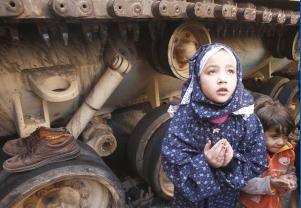
On 9December 1947, Dutch troops rounded up and killed an estimated 431 men in theJavanese village of Rawagede. It was one of the worst massacres during the‘Dutch police action’ in the Dutch East Indies just after the Second World War.

It’s almost64 years later and the Dutch government still shies away from anyacknowledgement of guilt or hint of responsibility. It’s purely development aidmoney and not a reparations payment or compensation and it’s not for Rawagede,it’s for the entire county. The €850,000 was supposed to fund a school, amarket and expand the hospital in the village.

Waiting

Some 30months have elapsed since the money was allocated but almost nothing has beenaccomplished. On the outskirts of the village, a rice paddy measuring aroundone hectare has been cleared but the school still hasn’t been built. The localauthorities say the building plans are ready and they’re just waiting for themoney. Sukarman say construction will begin as soon as they get the money. He’sthe chairman of foundation that has already built one school in Rawagede; itstands across the road from the cleared rice paddy and has some 800 studentsalready. Sukarman: “We built that school in just 3 months. The World Bank gavethe money to our local foundation and we could arrange everything directly”.

The Dutchdevelopment aid money is taking a different route: it’s not going to Rawagede,it’s not going to Balongsari, and it’s not even going to the district ofKarawang; it’s going to the interior ministry in Jakarta. The ministry isresponsible for deciding who can build a school and when. The Hague has signedan agreement with the Ministry and a portion of the money was transferred lastDecember. The local authorities have still not received any notification fromJakarta and they still have no idea when, or if, the project will be started.

The Dutchembassy in Jakarta has defended the bureaucratic maze, calling it ‘due care andattention’. Ambassador Annemieke Ruigrok: “All of the projects must have asustainable character and everything has to be carefully calibrated and theindividual projects need to be coordinated with each other. Due care andattention take time.” She added that the ministry is currently “working out thefinal details.”

Microcredit

It’s notclear what "working out the details" means, nor is there any sign of‘coordination’. Even though the local authorities have had their plans readyand waiting for the past 2 years, the ministry still hasn’t made any contactwith them.

Not all ofthe money that was allocated in 2009 is in Jakarta; €254,500 went to the DutchHivos foundation. The organisation has used some of the money to fundmicro-credit loans in Rawagede. Hundreds of people in the village – andhundreds of others in neighbouring villages – have taken advantage of the HIVOS microcredit loans. A total of €106,533 has been lent so far, while the restof the €850,000 is doing nothing for the people of Rawagede.

Hivos hasset a cooperative up and it now has 1247 members. It is supposed to be runningan organic shop and the Dutch foundation has so far funded it to the tune of€50,000. The head of the cooperative, Riyadi, acknowledges that the shop hasn’tyet been set up although a small gas canister business has gotten off theground. According to Riyadi, the €50,000 has been sent spent on operational costsand salaries.

Apology

Severalattempts to get compensation for the victims’ relatives were dismissed on thegrounds that the events took place so long ago that the charges had lapsed. OnWednesday, judges will issue a ruling on a case brought by four relatives ofRawagede victims; they are demanding an apology and compensation.

Theirlawyer, Liesbeth Zegveld, does not believe that the case has expired, sayingthat the Netherlands still handles cases dating from World War Two. If thejudges rule in favour of the plaintiffs, it could have huge consequences forthe victims - and their relatives - of other Dutch ‘police actions’ as theycould also claim compensation.


Saturday, August 13, 2011

Jambi Village Discovers Treasure Trove in Dutch-Era Safe

Jakarta Globe, August 13, 2011

Residentsof Koto Baru Hiang village in Kerinci district, Jambi, said on Friday that theyhad unearthed a veritable treasure trove of World War II-era money from an oldsafe.

AhmadNasril, the village head, said the discovery was made when the safe, which hadbeen sitting unused in the village hall as long as anyone could remember, wasopened during recent renovation work.

“The safehad always just been hidden away in a room in the village hall that peoplebelieved was haunted by a ghost, because it was always so dark,” he said.

The safe’srediscovery came after the village received funding to renovate the hall,itself a relic of the Dutch colonial era. Part of the work involved fixing up asection of the ceiling that had collapsed in the very room where the safe waslocated.

“When wefinally brought the safe out into the light of day, we used the chance to prizeit open,” Nasril said. “That’s when we found several bundles of old money fromthe Japanese colonial era.”

TheJapanese occupation of Indonesia lasted from 1942 until the end of the war in1945.

Nasril saidthat while the money did not bear any dates for when it was printed, it couldbe tracked to the Japanese occupation because it read: “ De Japansche RegeeringBetaalt Toonder Half Gulden ,” or “The Japanese Government Will Pay the BearerHalf a Guilder.”

However, hesaid the total value of the money remained unknown because many of the noteshad been damaged by mold, attributed to a half-century of humidity andrainwater leaking into the safe.

Nasril saidthe safe also contained documents with the old Indonesian spelling, including anotice decreeing the implementation of a livestock tax, dated July 1, 1947.

“Thisparticular document shows just how compliant the Kerinci people were aboutpaying taxes back then, even if it was to an occupying authority,” he said.

The villagehall had been used as an administrative office by the Dutch, who reoccupied thearchipelago shortly after the Japanese left in 1945. Later it was used as acenter for the traditional rulers of the district.

Nasril saidthe money and documents would be stored at his house for safekeeping while theKerinci administration was notified about the discovery.

“This isclearly a very significant find for us, especially coming so close toIndependence Day, when we look back at our history,” he said.

Antara

Monday, May 23, 2011

Egypt-Indonesia democratisation explored

The Egyptian Gazette, by Mohamed Kassem, Monday, May 23, 2011

JAKARTA – Egypt occupies a special place in Indonesia’s history and many Indonesians have not forgotten how Egypt was one of the first countries to recognise its independence from a colonial power.

Against this backdrop and the recent democratic transition in Egypt, there is a widespread international awareness of the similarity between Indonesia’s experience with democratisation since 1998 and the rapidly moving events in Egypt today.

Egypt is entering a period of historic political transition and is facing remarkably similar challenges to those that Indonesia had to deal with during the period of reformasi in the late 1990s and early 2000s.

Following a popular uprising against a previously entrenched authoritarian regime, Egypt today, like Indonesia a decade ago, is attempting to rebuild its institutions of state and foster a new democratic culture and open political competition.

Conditions in Egypt today resemble those of the immediate post-Suharto period in Indonesia, with the closest parallel perhaps in the months between the resignation of the Indonesian President in May 1998 and the convening of the Special Session of the People’s Consultative Assembly (MPR) in November whereby the agenda of reform was agreed upon.

Like that time in Indonesia, events in Egypt are moving rapidly with the holding of the referendum on constitutional reform on March 19 in Egypt and elections next September.

In light of political developments in the two countries, it is appropriate to compare them in other more basic ways. Indonesia and Egypt are of similar size and potential global significance and are pivotal in their respective regions.

Both have a moderate Muslim majority but with significant non-Muslim minorities; have a largely secular political culture but with challenges from Islamist minorities; and have had militaries with a major role in politics and the economy.

Given the similarity between the processes of democratic transition in Indonesia and Egypt, a workshop, organised by the Institute for Peace and Democracy, opens Wednesday in Jakarta to initiate dialogue between selected Indonesians and Egyptians regarding lessons and observations about the Indonesian experience that may be of relevance to efforts to strengthen democracy in Egypt.

This is not to suggest that everything that occurred in Indonesia from 1998 should or could be copied by Egypt, but that the Egyptians can select what they might find helpful. Mistakes as well as successes could be taken as inspiration or salutary lessons.

The objective of the workshop is first to hold dialogue and provide an opportunity for the Egyptian participants to be exposed to examples from a comparable country, not to develop particular proposals or solutions, say organisers.

The initiative of the workshop came from the Institute of Peace and Democracy (IPD) as the implementing agency of the Bali Democracy Forum (BDF) as a track to initiative.

The focus of the discussions would fall under the broad theme of “Setting the Agenda”: in other words, identifying what are the key tasks that need to be tackled in the immediate period to advance and consolidate democracy in Egypt.

The current situation is very fluid and the nature of constitutional and political arrangements in the post-Mubarak era are not yet clear. The most pressing task would appear to be to define what has to be done, how and when it should be done and who should do it.

Current debate in Egypt about what should be done appears to focus on questions such as the role of an interim administration, constitutional reform and early elections, the how and who embraces issues such as the place of the military in both the transition period and in future politics, balancing the respective voices of various majority and minority religious and socio-economic groups in the process of change, as well as the role of political parties and civil society in a new national political compact.

The when questions, especially the timing and sequencing of constitutional reform and elections, will critically affect the quality of popular consultation and participation and thus the nature of outcomes.

Topics of discussion include the role of the military in transition and their place in future democratic society, constitutional and political reforms, politics and state in Islam as well as the role of the media in transitional and consolidating democracy.


Tuesday, May 10, 2011

A Message of Hope From a Colonial-Era Massacre

Jakarta Globe, May 10, 2011

A total of 70 actors, mainly from the Mister and Miss Jakarta Association
(IANTA), staged a play about a massacre of ethnic Chinese by the Dutch
on Oct. 9, 1740. (Antara Photo)

Related articles

Theater-goers were treated to a story of love, tragedy and comedy over the weekend — not to mention a particularly good-looking cast to watch on stage.

Based on a true story from Jakarta’s history, the musical theater production “Sangkala 9/10” was staged by the Mister and Miss Jakarta Association (IANTA) at Taman Ismail Marzuki’s Teater Jakarta from Friday to Sunday.

A cast of 70 actors, most alumni of Mister and Miss Jakarta contests, put on five shows over the weekend to an estimated 5,000 audience members.

A number of big names were also involved in the production, including former Mister Jakarta and TV personality Indra Bekti, radio host Iwet Ramadhan and actor Teuku Zacky.

Producer Maudy Koesnaedi, who is also a former Miss Jakarta, said the show aimed to highlight a story from Jakarta’s past to point a way forward for the future.

Based on true events that took place in Batavia, as Jakarta was once known, the play told the tragic story of a massacre carried out by the Dutch at nightfall on Oct. 9, 1740 — giving the show its title, “sangkala,” or “twilight,” and “9/10,” the date of the massacre.

Thousands of Chinese, mostly working in the city as businesspeople, were killed by the Dutch colonists, who also attempted to influence the local Betawi people to help them eradicate the Chinese from the city.

However, their attempts were destined to fail, as the Betawi people decided to work together with the Chinese and fight back against the Dutch.

Amid the conflict in the play, a love story blossomed between two young people: Said, a Betawi man, and Lily, an ethnic Chinese woman. Their heroic efforts to unite their love, along with the two ethnic groups, served as the center point for the show.

Director Adjie Nur Ahmad said the story had been chosen because it reflected contemporary problems faced by the country.

“We have seen how Indonesians today are easily manipulated in the name of difference,” Adjie said, adding that this had led to many bloody conflicts in the country.

“What we are supposed to do is fight wrongdoing and support what is right, not the other way around,” he said.

To illustrate the moral of the story, the play was given the tagline “Berbeda Bukan Berarti Tak Perlu Dibela” (“Being Different Doesn’t Mean They Shouldn’t Be Defended”).

Maudy, the producer, said that she especially hoped the younger people in the audience had grasped the core message of the play.

“Instead of going to the mall every weekend, we believe theater could be a perfect alternative form of entertainment for the young,” she said. “Through this show, we would like to present a different side of the Betawi people.”

TV personality Indra, who played a Betawi character named Kosim, said he learned so much from the production — including a few basic moves of “silat,” Indonesia’s traditional martial art.

“I think this is a great theater production, I’m having so much fun,” Indra said.

Unlike his job on TV, which allows for a lot of improvisation, the theater role posed the challenge of a set script.

“I had to keep reminding myself that I needed to follow the script and all the rules,” he laughed.

Drawing a bigger crowd than both of IANTA’s previous performances, “Cinta Dasima” (“Dasima’s Love”) in 2009 and last year’s “Doel,” “Sangkala 9/10” was judged a success by Maudy.

Maudy also expressed hope that, after three productions, IANTA would continue to build on its success.

“We hope this can be a long-term project and that we can produce more shows in the future,” she said.

Saturday, April 30, 2011

Be Italian!

Sofia Loren, Anna Magnani, Silvana Mangano ... Italian women of the 50 were made ​​of another pasta. That macerated by the Mediterranean sun and unspoiled walls lime. Then the curves were a blessed virtue and strength, and race a precondition.
Since then much has changed the standards of beauty, not always for the better. Hence, the design duo Domenico Dolce and Stefano Gabbana have decided to claim the legacy and powerful female equal of those great divas.
In his collection spring-summer 2011 the curves are sculpted to blow lace, crocheted or embroidered Chantilly. The perfect white reflects the infinite light of these women and gold accessories multiplies.
Do not miss our selection of clothing and accessories with more Latin character this season. (via vogue.es)
 
3.1 Philip Lim, Teresa Helbig

Anna Magnani, pictured during the filming of Vulcano is one of the most charismatic Italian divas of the 50's

Dolce & Gabbana, Anthropologie

 Bulgari

Chantelle, Dolce & Gabbana

Dolce & Gabbana, Divina de Yanes Young

The great Sofia Loren is one of the highlights in this sexy yet traditional aesthetics at the same time, Dolce & Gabbana


The woven fabrics and, above all, fit in any of its variants, are the protagonists of the collection of the Italian firm
 

Earrings gold plated silver Etruscan collection Exquse Durán


Dolce & Gabbana, Topshop

Alberta Ferretti, Erdem

Monday, April 11, 2011

Two prehistoric burial sites found in Papua

Antara News, Mon, April 11 2011

"The finds are very interesting. The two burial sites show that prehistoric people living in mountain areas had different raditions"

Jayapura, Papua (ANTARA News) - The Jayapura Archeology Service has found two prehistoric burial sites in Papua province`s Pegunungan Bintang district.

One of the burial sites was located at Kabiding Hamlet, Oksibil subdistrict and the other one at Wanbakok Hamlet, Serambakon subdistrict.

"The finds are very interesting. The the two burial sites show that prehistoric people living in mountain areas had different raditions," a researcher of the Jayapura Archeology Service, Rini Maryone, said here Monday.

According to Rini, the tribes in Pegunungan Bintang District had a prehisroric cave burial tradition, different from those residing in Pegunungan Tengah District.

For example, the Dani tribe who live in Wamena and Tolikara, have a tradition of cremating their dead instead of entombing them ad in caves, Rini said.

Some artifacts such as splinter stones, square stone axes, were found inside and outside the burial cave sites.

The artifacts indicated that prehistoric humans in the region had a hunting and gathering tradition, Rini said.

Besides the two burial sites, The Jayapura Archeology Agency also found a prehistoric cave related to the worship ritual conducted in Okmakok Hamlet, Oksibil District.

Therefore, Rini asked the local authority to develop the prehistoric sites as potential tourism spots as well as to generate new knowledge from the prehistoric sites.

"The sites definitely have great cultural values," Rini said, adding that the local people should also preserve the prehistoric sites.

Editor: Aditia Maruli

Wednesday, March 30, 2011

Hundreds of artifacts unearthed in S. Sulawesi

Andi Hajramurni, The Jakarta Post, Makassar | Wed, 03/30/2011

Researchers say they have discovered hundreds of artifacts spanning several eras from sites in Bantaeng, South Sulawesi.

“We can classify the archaeological findings in Bantaeng into the pre-historic, pre-Islamic, Islamic and [modern] Bantaeng periods, based on the artifacts' characteristics,” research team leader Naniek Harkantiningsih said.

Ten researchers from the National Archeology Research and Development Center, the Cultural and Tourism Resource Development Agency and the Culture and Tourism Ministry conducted research in eight Bantaeng sub-districts between March 14 and 28.

Naniek said the team found approximately 600 artifacts, including Chinese ceramics and pottery that dated to the Yuan, Ming and Sung dynasties, and artifacts from Vietnam, Thailand, Japan and the Netherlands.

Researchers also found several coins and a burial complex that might date to the Islamic period in the 1between the 15th and 18th centuries, he said.
The burial site, discovered in Ulu Ere and Gantarang sub-district, was still intact and had been unknown to local residents, he added.

The artifacts, which would be conserved in cooperation with local groups, were evidence that Bantaeng was a center of the spice trade, shipping cacao and vanilla to European countries during the Gowa Tallo kingdom, Naniek said.

“The cultural remains must be preserved and be turned into a cultural heritage site as well as an object of tourism. This way the remains will bring benefits as an archaeological research center and as a source of economic development to the regency and people of Bantaeng” she said.

The researchers began work in January 2007 and were expected to investigate sites in nine regencies and one municipality in the province before the project ends in 2015.

Researchers will next move to Bulukumba, Sinjai, Bone and Maros regencies.

Wednesday, March 23, 2011

The bomb is not because of my Jewish blood: Yapto

The Jakarta Post, Wed, 03/23/2011

Head of the Pancasila Youth Organization Yapto Soerjosumarno brushed off the notion that he was sent a bomb in a book because of his Jewish ancestry.

“So what if I have Jewish blood? I cannot refuse the fate that I am of Jewish blood, but it has nothing to do with heritage. I am also a Muslim. There are Arabians who embrace Christianity and Buddhism. It's not something wrong. Me getting this book has nothing to do with Judaism. In fact, it was Ahmad Dhani who received a book with a Jew-related title,” he said on Wednesday in Jakarta as quoted by Tribunnews.com.

Yapto was referring to the musician who also received a bomb disguised as a book, titled “Yahudi Militan” or “Militant Jews”.

The book received by Yapto was titled Masih Adakah Keadilan dalam Pancasila (Is there Still Justice in Pancasila).

He said he was also wondering about the title of the book.

“I think my organization is in line with the nation's idea and aim against colonialists and as a citizen, I don't think it's wrong. Pemuda Pancasia [Pancasila Youth] does not stray from this country's ideology... I see a suspicious thing here. I am a nationalist, but why have I become a target for such matters?” Yapto said.

He added that he was also a Muslim who has “good ties with everyone.”


Related Article:

"The End of History" – Nov 20, 2010 (Kryon channeled by Lee Carroll)
(Subjects:Abraham, Isaac, Ishmael, Muhammad, Jesus, God, Jews, Arabs, EU, US, Israel, Iran, Russia, Africa, South America, Global Unity,..... etc.) (Text version)

"If an Arab and a Jew can look at one another and see the Akashic lineage and see the one family, there is hope. If they can see that their differences no longer require that they kill one another, then there is a beginning of a change in history. And that's what is happening now. All of humanity, no matter what the spiritual belief, has been guilty of falling into the historic trap of separating instead of unifying. Now it's starting to change. There's a shift happening."

Thursday, February 24, 2011

Tanri Abeng to build cultural museum in Rotterdam

Antara News, Fri, February 25 2011


This is just a piece of the story as I know, there are many more other literacy in this epic. In fact, the original text translator who was invited by the Dutch Government to translate some 6,000 pages of the manuscript, Muhammad Salim is able to translate it in a period of 5.2 years


Makassar, S.Sulawesi (ANTARA News) - Former Minister of State Enterprises Tanri Abeng who became the originator of the staging epic I La Galigo, will build a cultural and historical museum in Fort Rotterdam in Makassar, South Sulawesi.

"After staging the epic I La Galaligo, we hope that the cultural and historical museum will also be built in Fort Rotterdam in Makassar," he said here Friday.

He added that there are officials who do not know the heroism saga of South Sulawesi I La Galigo which drove him to establish the museum filled with works of literature like epic I La Galigo.

Tanri Abeng that explained Surek Galigo also called La Galigo was an epic and myth of Buginese civilization in South Sulawesi written between the 13th and 15th centuries in the form of poetry in the ancient Bugisnese language.

The story was written in ancient Bugisnese Lontara letters, composed in pentameter and in addition to tell the story of human origins, also serves as a daily practical almanac.

The epic I La Galigo is the oldest and longest in the world before the epic of Mahabharata of India. It mostly contained poetry written in ancient Bugisnese language.

This epic tells the story of Sawerigading, a courageous hero and also foreigners.

He said that the epic I La Galigo Surek is not a history text because it is full of myth and extraordinary events. However, the epic is still given to show historians the Buginese culture before the 14th century.

"This is just a piece of the story as I know, there are many more other literacy in this epic. In fact, the original text translator who was invited by the Dutch Government to translate some 6,000 pages of the manuscript, Muhammad Salim is able to translate it in a period of 5.2 years," Tanri Abeng noted.

Therefore, the national businessman from Selayar district (South Sulawesi) said, it is very sad if there are officials or many people who did not know the epic figure of I La Galigo who received a recognition as a world heritage.

Hence, I will try to create a cultural and historic museum for the younger generation who wanted to know about the literary works of South Sulawesi and do no need to go overseas to study it, he said.

"If you want to study literature or the heroic figure of the Buginese in Makassar there is is no need to go abroad, and simply go to Fort Rotterdam museum. I do not want the younger generation to forget that in South Sulawesi the world has ever given birth to a legacy" Tanri Abeng said.

Editor: Aditia Maruli

Friday, February 11, 2011

Indonesian navy finds Japanese bastion in Makassar

Antara News, Fri, February 11 2011

Makasaar, S.Sulawesi (ANTARA News) - Indonesia Navy Main Base VI in Makassar found the sites relics of the Japanese bastion when tracing river delta in Lakkang village, Tallo sub district, Makassar on Friday.

The Commander of Navy Main Base VI Intelligence Team, Major Dismet Kolmet, said here, Friday that the team found some signs that showed the tunnel was the bastion of the Japanese army while leading the survey.

"We found seven bunkers here. We estimate the two bunkers were booth weapon that could be used to shoot long distances," he noted.

He estimated, there are several bunkers located in the vicinity of ammunition, because usually hideout bunker is built circularly.

The team derived by the navy also requested information from some local residents whom are estimated still having relationship with the history of the old bunkers in Tallo river mainland.

"We recommend the location to be secured first before cleaning done because it is possible to found mines or other dangerous objects at the excavation site," one of the team sweeping member said to the local people.

The navy requested the culture and tourism office of Makassar to involve preservation of archaeological heritage center and archaeologists to examine the location before the people digging and cleaning the historic areas.

The Head of Resources and Community Participation, the culture and tourism office of Makassar, Andi Mirza Zainal, said it would immediately make a written request and an audience with the center.

"These are historical assets that can sell Lakkang as a tourist village. So, we will immediately contact the archaeological center and invites Hasanuddin University to research the area," he said.

The head of Lakkang village, Andi M. Fara, explained, some local people who had long lived in the area estimated that the bunker was built in the 1940s when Japan was in Makassar.

In fact, the local people said, the place was once used as a consolidation or secret meetings by the kings of South Sulawesi.

He added, many foreign tourists who had been visiting Lakkang are attracted by the seven bunkers located in Tallo river delta, Makassar city.

"The condition of the bunkers is not too good, because it is buried in silt soil sediments. We hope the villagers social service by involving the navy can support the efforts of our village to promote the appealing objects to the tourists," he said.

The head of Lakkang village stated, the historical relics in their areas is expected to be a tourist attraction to visit the location of bunkers that could only be reached by using a small boat or pincara (raft-like transportation mode).

Editor: Suryanto

LinkWithin